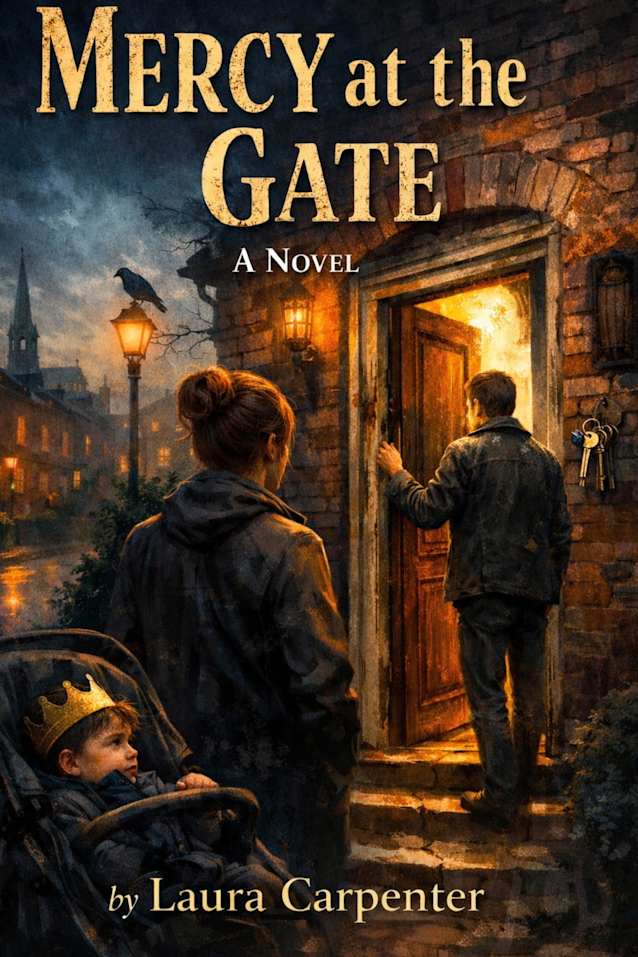
Mercy at the Gate
About
A Belfast street can look ordinary from the outside: a sticky gate, a stubborn hinge, a kettle that never gets a rest. But Maeve knows how quickly “ordinary” turns into survival.Maeve has rebuilt her life the hard way—one school run, one gig, one careful choice at a time. Her son is three, her world is small and fierce, and she’s finally found something that feels like home: a quiet house at the edge of a bus route, a community that shows up without being asked, and Nolan—steady, unshowy, and impossible to shake once he’s decided you’re his.
Then the letter comes.
A crisp invitation dressed up as a threat. A “family council” in a venue chosen for intimidation. Bring the boy.
Maeve refuses to play theatre for men who think power is the same thing as entitlement. But refusal doesn’t always end a story—sometimes it starts one. Cameras appear. A tracker turns up where it shouldn’t. Strangers linger like scenery. And the pressure tightens, slow and deliberate, aimed at the one thing Maeve will burn the city down to protect.
What saves her isn’t a single dramatic act. It’s the long, grinding courage of the everyday: neighbours who pay attention, a solicitor who doesn’t blink, nuns who weaponise a rosary, and a man who fixes what breaks—hinges, engines, and fear—without asking for applause.
Set in working-class Belfast and threaded with music, family loyalty, and the tender chaos of found community, Mercy at the Gate is a story about the kind of love that doesn’t grandstand.
It just stands there beside you.
And says, quietly:
Come home.